Author: fuzapost

  • Your life is like a software product

    Your life is like a software product. Not in the sense that people are a bit like robots… I mean that you can choose your life’s features, look-and-feel, and what it does! (If this analogy doesn’t work for you.. sorry! Feel free to suggest a better one in the comments below)

    Software development isn’t the same as it used to be. Instead of deciding all the requirements up-front, we use Agile to incrementally deliver value [1].

    The same can be true of our lives.

    People no longer need to feel like they are deciding “Mummy I want to be a doctor”, but rather “Mummy I want to be a doctor first”. Approximately 1 in 10 people in the UK have a current intention to change their career[2].

    IMG_20160305_161256.jpg
    Even Birmingham (UK) changes

    How does this relate to you?

    Firstly, by thinking of your life like a software product, you can consider the features your life currently has. Is it happy? How connected are you to other people? What are you spending your time on? What can you measure to understand more about your life? What are the issues you want to fix?

    Once you understand where you are, you can think about where you are going. Not necessarily overall, but for the next “increment”. In particular, what one small change would make something better? And do that. People often do this each year at New Year: I do this at least every three months, since (maybe) this should be enough time to form a habit [3].

    And you know what, if what you try fails, that’s fine: you’ve learned something! Information density (and learning) is highest when we fail half the time. You can stop that experiment, and try something new. Who knows, now the most important thing might not even be related to what you were doing last month. Maybe “Prepare in advance for Christmas” is now more important than “Lose 5kg by the end of November”.

    This is hardly new news but please, don’t wait to start improving your life. Perhaps take up “Inspect and Adapt” as your (next attempt at a) personal mantra. If you’re after ideas on how you can help yourself understand more, take a look at something like http://plans-for-retrospectives.com/index.html

    [1] http://www.agilemanifesto.org/

    [2] http://www.thecareerpsychologist.com/2010/11/career-change-statistics/

    [3] http://www.sciencealert.com/here-s-how-long-it-takes-to-break-a-habit-according-to-science

  • If not now, when?

    In November, following our wedding, my wife Chaohui and I were looking for a “family home”. In the car on the way to visit my Grandad Jim in South Wales, we had a nice chat. Chaohui had the idea not to move house: instead to “make do” with our already-too-small place and use her salary pay our mortgage. That way, I could leave my job and try to live the life I want, as outlined in previous posts. In short, this meant using maths to help businesses, working for myself and spending my breaks outside.

    flags.jpg
    Throwing caution to the wind

    This brought with it a lot of questions: Would I actually want what I thought I want? Would I get lonely without colleagues right away? Would my wife and I be okay with the heavily reduced income? We discussed this last topic at length, and decided to consider this period as an investment, in the same way that we might invest in shares, buying a house, or having money in the bank. Yes, it is a risk, but by managing our own expectations we can choose to afford it. The other big questions I’d only understand through trial-and-error: I’ll let you know how it goes!

    So I handed in my notice in January, for an April start to my new life. This delay was chosen so that the start would coincide with British Spring :). During this time we started consciously “saving up”, reducing our discretionary spend allowance to £50 each per month to build up a financial buffer.

    chicken
    Margaret

    For me, the goal is not really financial, as outlined in another blog post. I’m making a big effort to balance financial with social goals, by setting up my company’s objectives around more than just money coming in. I identified these goals before I made the change (what if I could achieve what I wanted in a way I hadn’t considered yet!).
    Even having taken the plunge, I am still a bit scared: giving up a job I like for a more direct self-challenge, especially in so many different areas, is a bigger change than perhaps I would’ve chosen to have all at once. Thanks to the support of many of my ex-colleagues, family and friends, I feel surer now than ever that this is the right thing for me to do. And if it fails: I will have learned something!


  • Vive le Mathématique

    The question then came as to what I’d precisely do… From my previous jobs, from university, from family, and from the Institute of Mathematics, I had quite a few contacts in various places: so I caught up with them. I also visited a local small business meetup to understand what their problems were, and I asked family and friends to put me in touch with anyone they knew who might have some interesting problems to solve that I could apply maths to.

    group.jpg
    Some of my friends. The dog is called “Ping-pong”.

    This led to a bunch of initial chats and lunches with various businesses and charity people. Because of my disposition and genuine interest, I was fascinated. I did struggle slightly to get a good format for the discussions, and as a result they were often freeform and I left perhaps not getting what I wanted from them. I started to experiment with putting together a framework/agenda before each session, but for some reason I never took them out of my bag: perhaps this was because I was worried it would turn it into a meeting instead of a chat. I was (and still am) keen that the brand I build be one of approachability. In any case, the act of preparing felt extremely valuable. Perhaps Eisenhower’s now-cliched “Plans are useless, but planning is indispensable” holds here.

    Fawlty
    Don’t mention the war.

    After these discussions a few things were clear:

    • Few business owners knew that maths could solve their problems
    • People had heard of Analytics (and sometimes Data Science)
    • Sales is hard

    I also came to realise:

    • Fixing small business’ immediate, known problems was seen as being more about marketing (with the people I spoke to at least)
    • Larger businesses were often keen to get the benefit that others were getting from data
    • There is also something useful to be done around “smart data collection”, which fits well with my data-driven-decisions philosophy
    • A lot of people could do with some help improving their internal culture, and would see benefits by focusing on delivering value for their customers

    I decided on the back of all this to focus on finding applications of maths, and in particular on using data to inform decision-making. Often this would involve predicting outcomes. This was good because I could use Open Gov data to start with, without needing businesses to share their data.

    Now that I knew where my focus should be, I needed a name for the business I wanted to start. Over Christmas my family and I used our scrabble set to come up with a name (true story):

    Fuzanaming
    Powered by Christmas cake

    Back to where we are now: I’ve got time, I’ve got ideas of what to do, and some leads on who to do it with. If you, dear reader, have any analytical or cultural things you might like help with, please do let me know at guy@fuza.co.uk.

    Thanks for reading, and if you have any feedback (especially on content or style) please comment below so I can improve :).

  • Why I jumped

    I’ve started writing this today for two main reasons:
    1) Because I’ll forget some of what happened (and what I learned!) if I don’t write it down
    2) Because it’s the top card on my Kanban board

    Ok, let’s set the scene. Two years ago, I was working for a major international retailer on their forecasting algorithms. They then did a huge restructure and I got told I had to work in smoggy London.

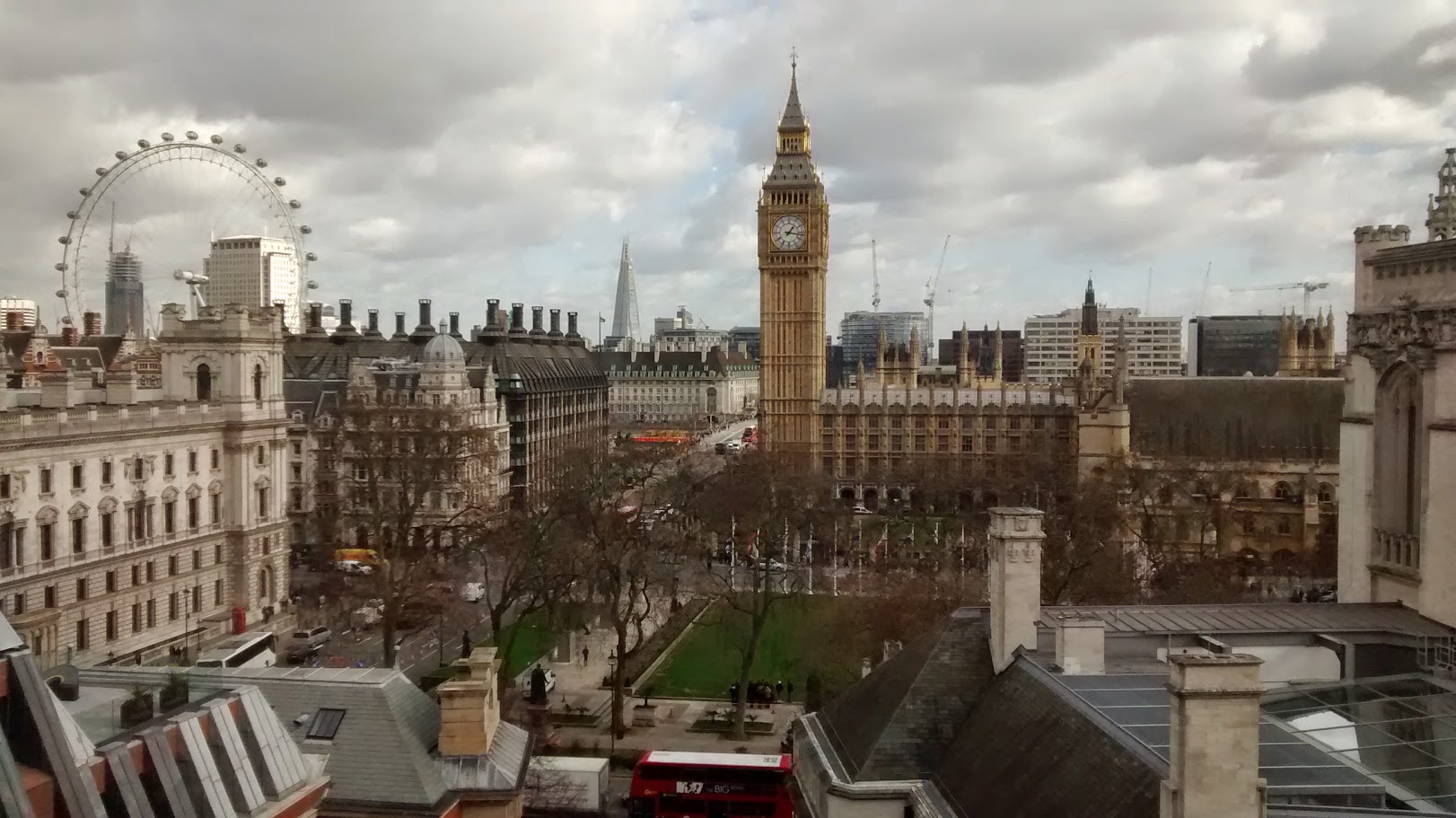
    london.jpg
    London town: Greyness included

    I wanted to help out more people by using my maths skills, like I was doing in my previous role, but instead I was made into something of a Project Manager for a high-profile Android project they were running.

    Whilst this might seem glamorous, I think this was the key moment at which I realised I wanted to work for myself – to be free from the whims of upper management, to have more autonomy over the maths that I apply and the problems I solve, and to be able to do that in a smart way: taking a break when I need it, not when it happens to be 6pm.

    However, there was a lot of solid reasons that time wasn’t right for me to dive in yet: I had job security and decent income, and no momentum. My colleagues and Cambridge university friends were now busily climbing

    downing
    A privileged view

    their respective ladders in finance, academia, and law. If I’m honest, there was a fair amount of social pressure to conform! So instead, I left my job to work elsewhere, in a job where I helped people be empowered by Agile practices, and be helping HR be smarter and more data-driven about their people-processes. I really enjoyed the role: the things happening in this space are super interesting.

    Regrettably, there were a number of things that I couldn’t reconcile with my previous employer that were deal breakers for me:

    – I wasn’t really using my maths to help people (though maybe that may have been possible later)
    – Prohibitive clauses in the employment contract, stopping me from helping anyone “on the side”. I even had to get approval to be a Trustee of a charity…
    – If I was bashing my head against a wall, I couldn’t do the smart thing and go out for run during the day

    chickens
    The girls at home with the vegetables

    Please don’t think I’m complaining about my previous employers! On many things my previous employer was awesome. Awesome enough that I enjoyed my time there for over a year despite my longing for genuine autonomy and impact.

    Now you’ve got the background, my next post will cover more on how my journey actually started.

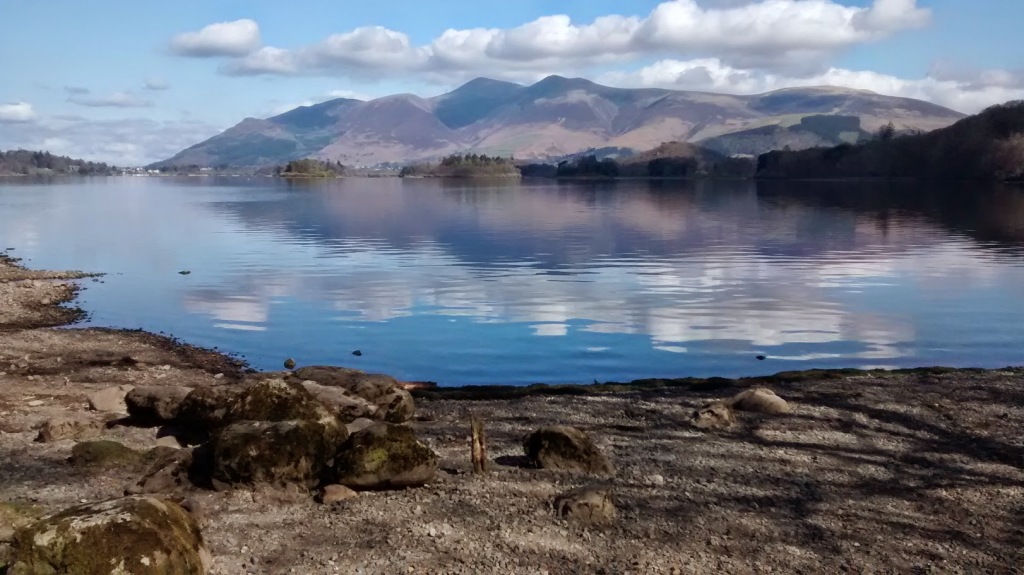
    lakes
    I love hills